

I’ve often been invited to insect-eating events and talk shows, where people ask what insects actually taste like. In this article, I compare more than ten species—including silkworms and crickets—and rank them from the most delicious to the least tasty. I hope this guide helps anyone curious to try edible insects for themselves.
Top 5 Most Delicious Edible Insects
1st Place: Longhorn Beetle Larva

Most insects share a distinctive, hard-to-describe “insect smell.”
In contrast, longhorn beetle larvae have very little odor or bitterness. Their flavor is rich and slightly sweet, reminiscent of milt (fish sperm).
When prepared as teriyaki or served as sushi-style gunkan rolls, both were exceptionally delicious.
The thin skin gives a pleasant pop, releasing a smooth umami that spreads across the palate.
This dish is also featured in Life-Changing Gourmet Insect Cuisine: 50 Selected Recipes (Yama-to-Keikaku-sha), co-authored with entomophagy expert Shoichi Uchiyama.
2nd Place: Cicada Nymph

When I first tasted smoked cicadas, I was amazed by their firm, shrimp-like texture and the walnut-like richness of their flavor.
Later, I joined an event held by Semikai, a research group for insect cuisine, where all participants caught and cooked cicadas together—both nymphs and adults. It was an enjoyable experience that combined the thrill of foraging with the joy of cooking and tasting. From that year on, I even began catching cicada nymphs myself.
The Mindset When Hunting Cicadas
Catching adult cicadas is easy, but finding nymphs requires knowing the right time and emergence spots, and at first I often failed.
Cicadas are eaten in many countries and regions, and it’s easy to see why—they have little odor and a pleasant flavor.
Yet catching nymphs that are about to emerge fills me with guilt. The moment of emergence itself is astonishingly beautiful.
Of course, it isn’t only cicadas that make me feel the weight of taking life. I want to receive every life with gratitude.
The adults have a nice crisp texture, but less body and richness than the nymphs, so in terms of flavor, the nymphs are definitely better.
2nd Place: Bee Larvae

Tied for 2nd place with the cicada is bee larvae.
In Japan, bee larvae are a traditional food often eaten in mountainous regions and are even considered a form of regional cuisine—so it’s no surprise that they’re delicious. The black hornet, Vespa ducalis, is affectionately called hebo in some areas.
My first encounter with bee larvae was when I was in elementary school.
A classmate shared some from her lunch box with me. At the time, I didn’t know what it was, but when I took a bite, I thought it tasted like a mild, cheese-like food. When I asked what it was, she told me—bee larvae.

Flavor Differences Among Bee Species
I’ve eaten larvae from several species—giant hornets (Vespa mandarinia), black hornets (Vespa ducalis), small hornets (Vespa analis), yellow hornets (Vespa simillima), and common hornets (Vespa crabro).
Among them, I found the prepupal stage of the black hornet and the yellow hornet to be the most delicious.
The flavor is intensely savory, like concentrated cheese or egg protein.
The thin outer layer has a faint resistance when bitten, similar to the delicate skin of a bean.
Compared to the smaller species, the giant hornet tasted rather coarse and less refined.
Recommended Cooking Methods
They taste great both roasted and boiled—and, of course, bee-larvae rice is also delicious.
Among Japanese entomophagy enthusiasts, the top recommendation is fresh bee larvae shabu-shabu (lightly swished in hot broth).
4th Place: Cherry Tree Caterpillar

“Sakura kemushi” is the common name for the larva of the moth Phalera flavescens. It feeds voraciously on cherry tree leaves and is sometimes regarded as a garden pest, yet it is non-toxic and known as an edible insect with a subtle cherry-blossom fragrance.
Its appearance may not appeal to everyone, but once eaten, the sakura kemushi has a gentle cherry-like aroma and flavor, mild and pleasant with no strong aftertaste.
It’s delicious when candied with sugar, and equally tasty when cooked with sticky rice as sakura okowa.
Like longhorn beetle larvae, it has a slight resistance to the bite—similar to the thin skin of a bean.
5th Place: Giant Water Bug

Male giant water bugs have a fragrance reminiscent of La France pears—a remarkably pleasant aroma.
When producing the insect cuisine book co-authored with Shoichi Uchiyama, we included a recipe from the Insect Cuisine Research Group for a “tagame cake,” which captures that unique scent within a dessert.
I thought it was a wonderfully creative and inspired idea.
Memories of Eating Giant Water Bugs
I have a personal memory involving giant water bugs. When I was in junior high or high school, my father, who worked in import and export, once received a jar of nam pla-marinated giant water bugs as a souvenir from a business partner.
At the time, I didn’t realize they were water bugs—I just remember being astonished to see a large container filled with big, black beetle-like insects.

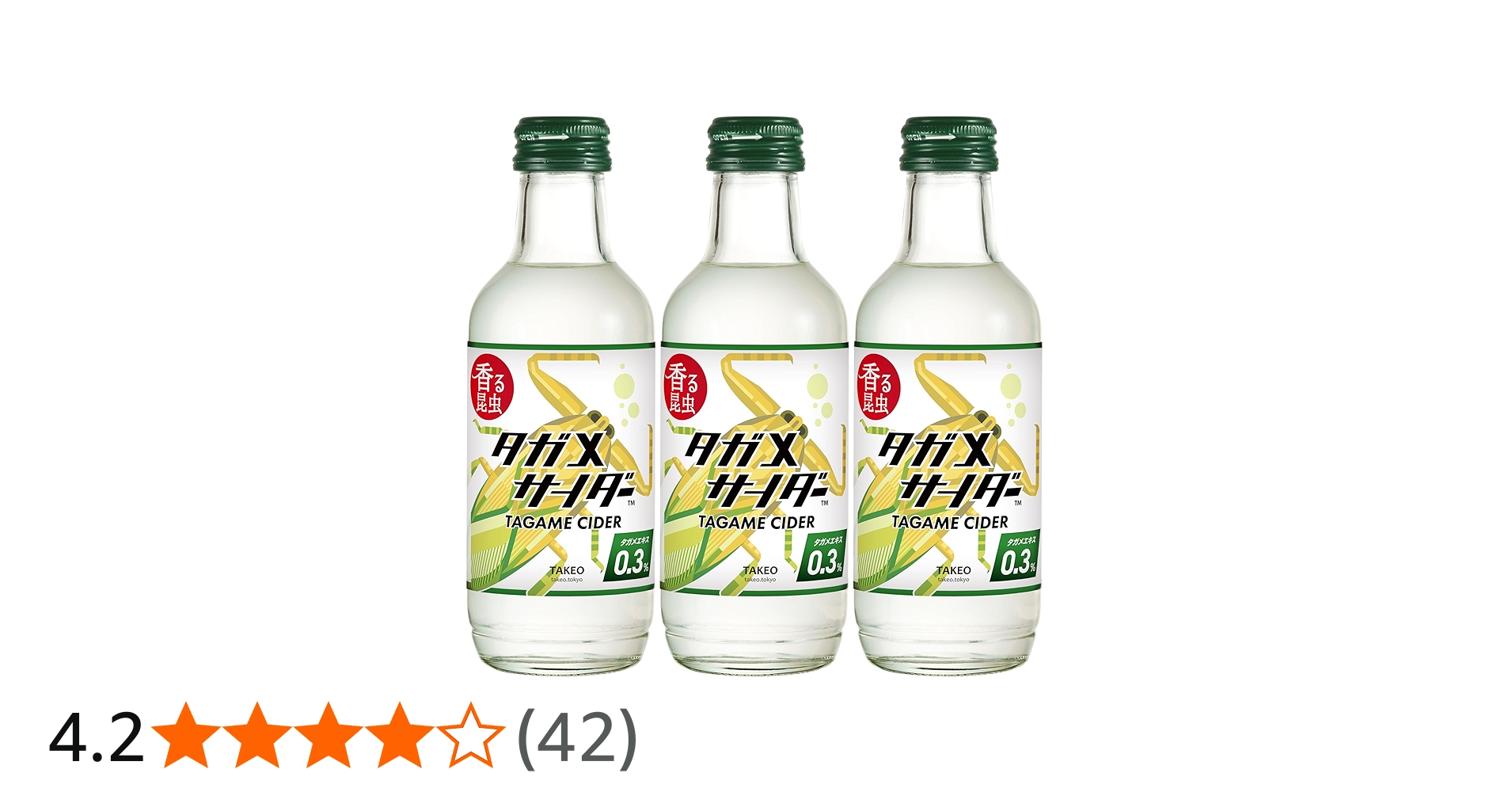
A Japanese company called TAKEO has even commercialized Tagame Soda, a remarkable product that makes excellent use of the giant water bug’s natural aroma.

The 3 Least Tasty Insects
1st Place: Centipede

Of all the insects I’ve eaten, this was by far the worst.
The texture is hard, similar to that of a scorpion, which is as expected—but the real problem is the taste.
It has a strong antiseptic smell, like povidone-iodine, and when eaten, that peculiar odor rises from the stomach and lingers in the nose.
I truly can’t handle that scent, and I never want to eat it again.
2nd Place: Madagascar Hissing Cockroach
Not as bad as the centipede, but it still has a strong, distinctive insect odor that I find unpleasant.
Some people might not mind it at all—it’s one of those flavors that really depends on personal preference.
The peculiarity of its taste is somewhat similar to sake lees.
Silkworms have a similar note, and I think that too is a flavor people either love or hate.
3rd Place: Silkworm

Since silkworms are widely eaten as food, it may sound unfair to call them “bad,” but they do have a strong peculiarity.
The adults and eggs are relatively easy to eat, yet the larvae and pupae have a much more pronounced flavor.
You can get used to it while eating, but after some time, the aftertaste becomes difficult again.
It’s fair to say that silkworms are an ingredient with a very distinctive character.

How to Make Silkworms Taste Better
Seasoning them strongly makes silkworms easier to eat.
I once made a “Silkworm Life Bowl,” using rice cooked with tea brewed from silkworm droppings and topped with larvae, adults, and pupae together.
This preparation suppressed much of the distinctive odor, making it quite palatable. I presented this recipe at the Insect Cuisine Research Group.
The silkworm eggs have a pleasant pop when bitten—similar to tonburi (field caviar)—and are quite tasty.
Conclusion and Notes
Through years of tasting many edible insects, I’ve realized that each species has its own unique flavor, aroma, and texture—just like any other ingredient. While some insects, such as longhorn beetle larvae or bee larvae, can be truly delicious, others require courage and creativity to prepare in a way that brings out their best qualities. Eating insects is more than a curiosity; it’s a way to rediscover food culture, sustainability, and our relationship with other living beings. I hope this ranking encourages readers to explore edible insects not with fear, but with curiosity and respect.

コメント